Use your common sense and avoid scams

Find out who owns the home
If you are renting a home through a private person, you must ask for documentation that the person actually owns the home. You can double-check that information with tinglysning.dk or boligejer.dk, where you can see who owns the home.
Check if the home is on the market
If the landlord has a different name than the one you can find on tinglysning.dk or boligejer.dk, we would recommend that you contact the owners and find out if the property is for rent.
Don't pay money for a rental property you haven't seen
It is important that you see the property before you pay prepaid rent, deposit or rent.
Do not pay in cash or to a foreign bank
Often a fake landlord will want you to transfer money (prepaid rent, deposit or rent) to a foreign account (e.g. Western Union or PayPal) because then you won't have the same opportunity to document that you have transferred.
Request a showing
Always demand a showing of the home. At the same time, you can check that the landlord's name matches the name on the mailbox and the door phone.
Make sure you have a valid lease
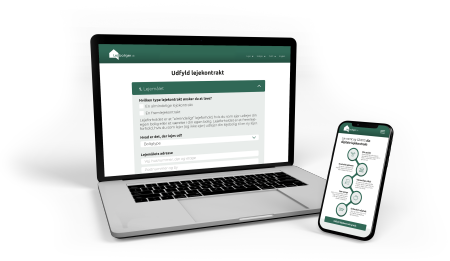
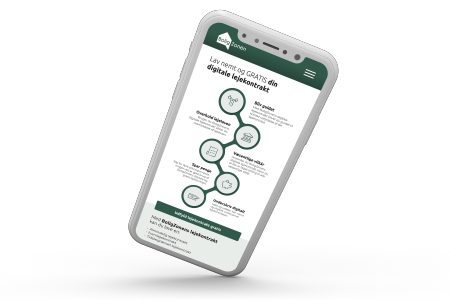
Make sure you get a signed tenancy agreement from the landlord, so you can read it thoroughly before you sign it yourself and send it back. Just as you should not transfer any money to the landlord before you have seen the property, you should also not sign the lease before you have seen the property. A fake landlord may try to avoid a tenancy agreement, which is an essential security for you as a tenant. If the landlord expresses that it is not important and/or does not have one at hand, you can send him or her a link to BoligZonen.dk's free digital lease contract.
Make sure to get agreements in writing
In addition to the lease, you can agree on some small things along the way. As long as they are oral, you can hardly prove them later, if it becomes relevant. Therefore, always ensure that your agreement is confirmed in writing, e.g. in the form of an e-mail.
Don't let the landlord pressure you
If the landlord tries to pressure you to sign the lease or e.g. transfer a deposit immediately, it could be a sign that something is wrong.
Check if the economics make sense
Check whether the rent complies with the rules that apply and is not completely out of proportion. All municipalities have a rent board, which can advise you on this, where comparisons are made with similar housing. If the rent is significantly lower than other homes in the area, this may indicate that it is a fake landlord.
We have now gone through a number of points that you will hopefully take with you further in your housing search.